National Civil Rights Museum Op-Ed
Dr. Russ Wigginton, President
Two hundred and fifty years ago, a group of men signed a document that made an audacious claim: that all men are created equal, endowed with unalienable rights to life, liberty, and the pursuit of happiness. They meant it imperfectly; many of them enslaved other human beings while writing those words. But the words themselves were large enough to outlast their authors’ failures. That is the miracle and the burden of the American founding.
Today we celebrate the Semiquincentennial, 250 years of a democratic republic that has survived civil war, depression, and repeated crises of conscience, and that has, however imperfectly, always found a way to correct itself. That is genuinely worth fireworks and celebration.
But the most patriotic thing we can do today is also the most honest: ask whether the promise of that founding document is real for everyone living under it right now.
Frederick Douglass asked this question on July 5, 1852, the day after Independence Day, in a speech that should be required reading for every American. He did not call for the dismantling of the republic. He called for its completion. He believed in the Constitution’s genius even as he condemned its betrayal. “Interpreted as it ought to be interpreted,” he said, the Constitution “is a glorious liberty document.”
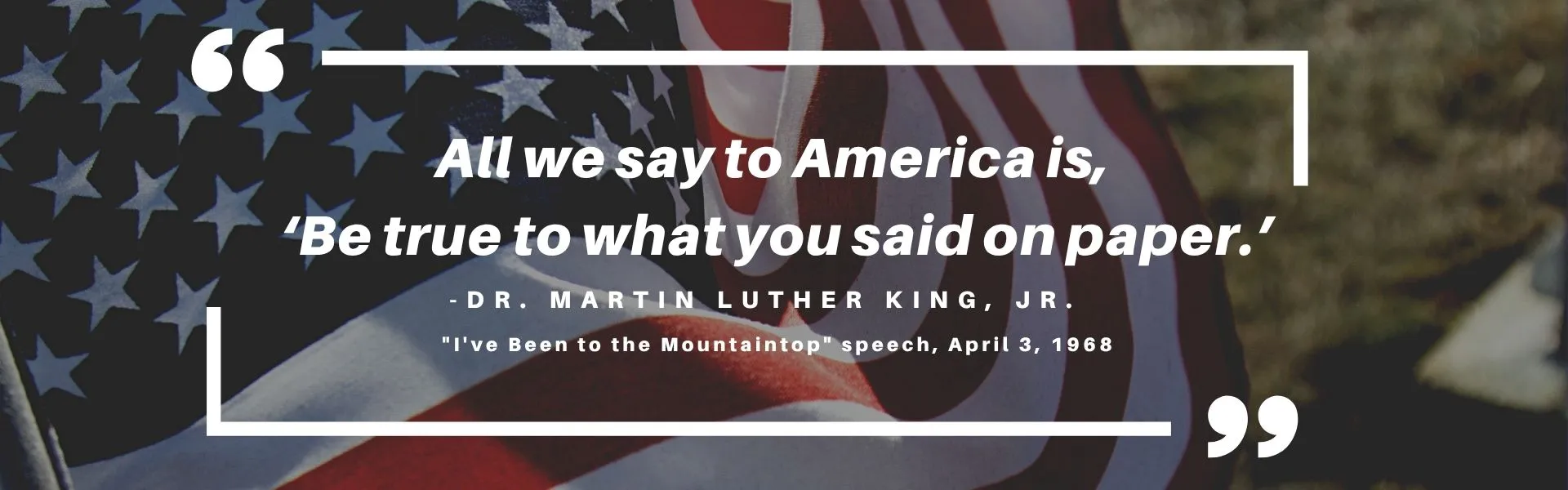
Dr. Martin Luther King Jr. stood on those same shoulders when he called on America to simply “be true to what you said on paper” in his final 1968 Mountaintop speech in Memphis. Not to rewrite the founding. To honor it. His Poor People’s Campaign, cut short by an assassin’s bullet in 1968, argued that economic justice was not a radical idea. It was the logical extension of the Declaration of Independence applied to every American, regardless of race or class.
That extension remains incomplete. In 2026, the gap between the founding promise and the daily reality is measurable: in the cost of housing outpacing wages, in medical debt erasing savings, in the quiet arithmetic of families choosing which bills to pay. These are not abstract failures of policy or personal responsibility. They are specific failures to deliver the “pursuit of happiness” that the founders advertised.
The Founding Fathers themselves disagreed fiercely about how to build this republic. That argument was healthy then, and it is healthy now. What’s not healthy is pretending the argument has been resolved with satisfaction.
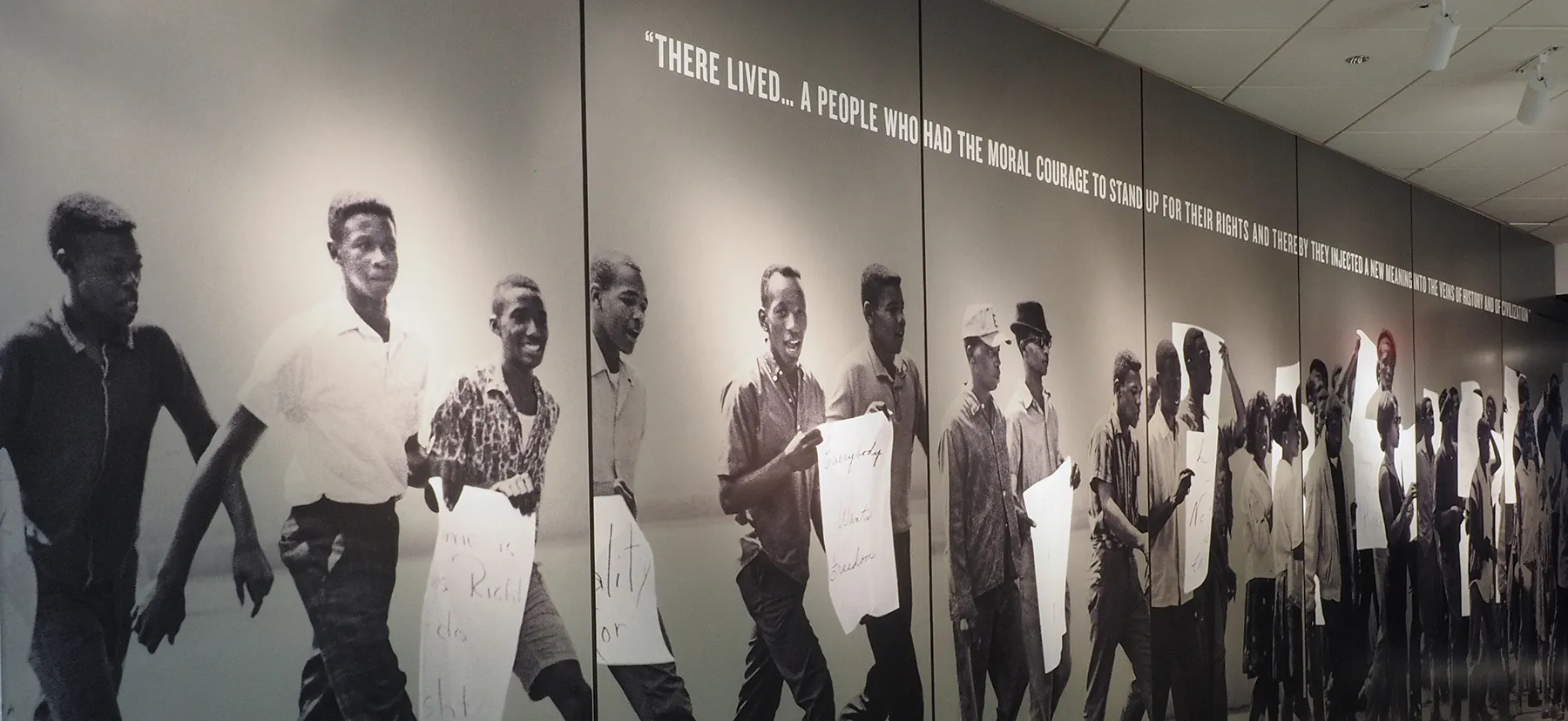
The National Civil Rights Museum at the Lorraine Motel in Memphis traces exactly this thread: how each generation of Americans has had to decide, again, whether and how the founding ideals apply to everyone. The generations that affirmed the belief that all humans are equal moved the country forward. Ours must make the same choice.
July 4th is not the birthday of a perfect country. It is the birthday of an idea big enough to keep improving. Two hundred and fifty years in, the most American thing we can do is celebrate what we’ve built and refuse to stop building.
That’s what the founders asked of us. We owe it to the founders and the next 250 years to do so.