The Record Remains
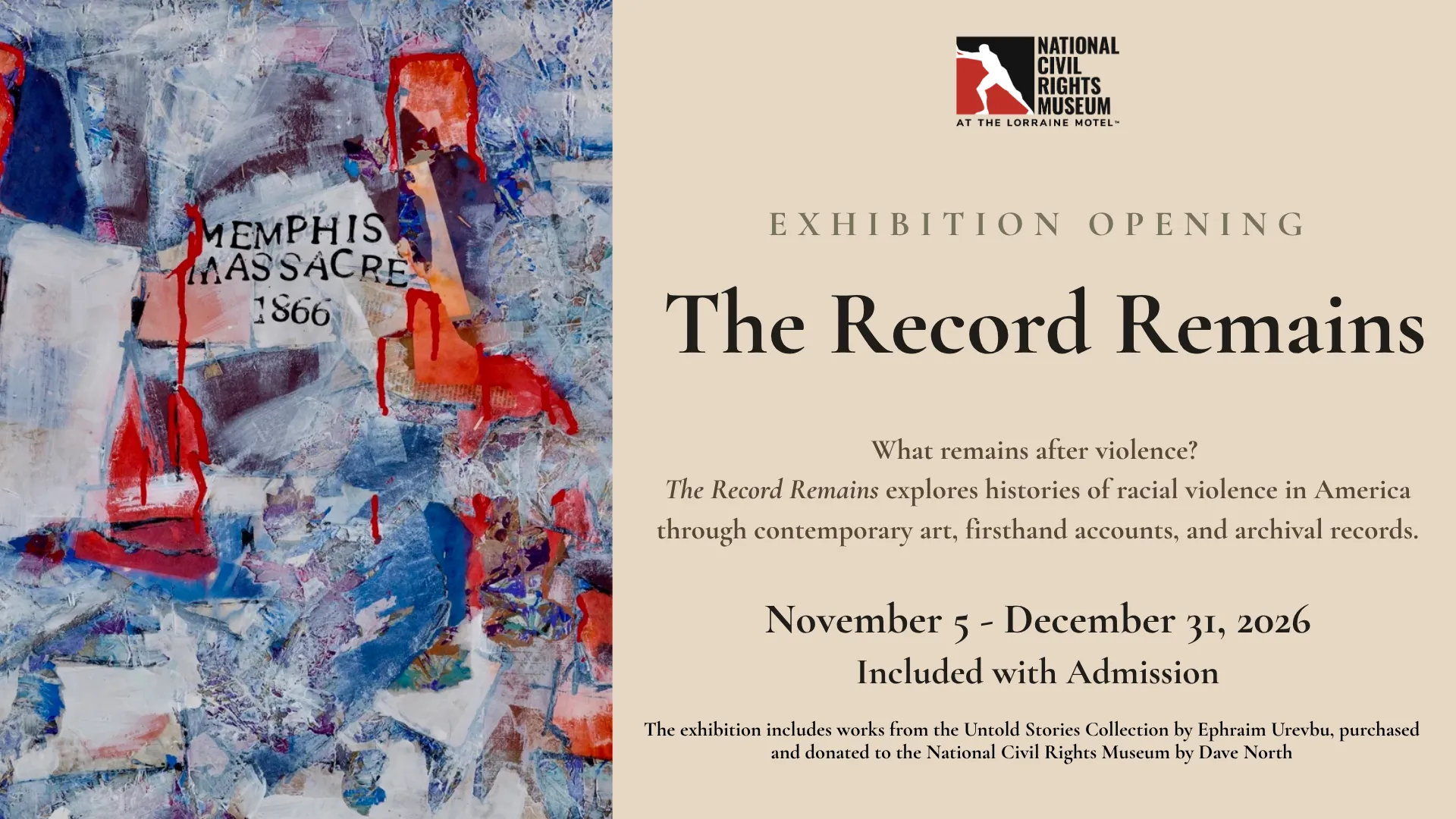
November 5 – December 31
State of Tennessee Gallery
Included with Admission
What Remains after Violence?
Some things are too heavy for words. Some histories have been fragmented, buried, or deliberately erased, and a timeline of dates and facts can only carry us so far. Sometimes the way in is through color, texture, and feeling.
The Record Remains explores histories of racial violence against Black communities in America through abstract painting, survivor testimony, and historical records. These paintings don’t illustrate what happened. They give you a place to stand with it: a quiet space to feel the weight of histories that documents alone can’t fully hold.
Where Words Fall Short, Art Speaks
How do you picture the unimaginable? Abstract takes a different route: instead of recreating the violence, these works use color and expressive brushwork to carry what language and photographs cannot: grief, terror, loss, and the stubborn persistence of those who survived.
At the heart of the exhibition are abstract works from the Untold Stories collection, displayed alongside the records that endure: testimony, photographs, newspapers, government documents, oral histories, and family memory. Where the archive is silent, the paintings hold space for what was lost. Where the documents give us facts, the paintings help us feel them.
“Art reaches beyond the facts of history to restore the humanity, courage and resilience of those who lived it and died for it.”
— Ephraim Urevbu, Artist and Founder, The Naked Truth Art Project
The Record Remains Because Someone Kept Making One
Violence creates rupture, but it doesn’t guarantee erasure. Survivors, witnesses, journalists, families, artists, and activists kept the record alive when official accounts ignored, distorted, or suppressed it. In this exhibition, abstraction is part of that tradition: a way to keep memory alive when a literal picture is not enough or too tough.
Histories Explored
Seven histories of racial violence and forced displacement:
- Ebenezer Creek
- The Memphis Massacre of 1866
- Thibodaux, Louisiana
- East St. Louis, Illinois (1917)
- Corbin, Kentucky
- Elaine, Arkansas (1919)
- Tulsa, Oklahoma (1921)
Each section invites you to look through three lenses:
- Story: What happened, and whose experiences help us understand it?
- Record: What evidence survived, who preserved it, and what does it reveal or leave unresolved?
- Legacy: How has this history been remembered, recovered, challenged, or carried forward?
The paintings serve as a bridge between evidence and emotion. The focus is not only on the violence itself, but on the people who refused to let it disappear.
“The National Civil Rights Museum is where these stories belong…a place where memory becomes witness, art gives humanity to history and the past challenges us to shape a more just future.”
— Ephraim Urevbu
About the Artist
Ephraim Urevbu is a Nigerian-born artist and the founder of Urevbu Contemporary on South Main Street in Memphis. Raised in Warri, Nigeria, he earned his MFA from the University of Memphis. His acrylic and mixed-media paintings use color and expressive brushwork to ask how the past remains present. The Untold Stories series grows out of his larger project, The Naked Truth: An American Story in White, Red and Blue, which examines the history and ongoing effects of racial injustice in the United States.
Gallery Talks
Two programs invite you to look closely at the paintings, the primary sources, and the histories behind them.
Curator’s Tour
Thursday, November 5
Walk the exhibition with Curator Erica Harper and hear the thinking behind it: how the paintings shaped the choice of histories, how patterns emerged, and why contemporary art sits alongside primary sources.
Artist Gallery Talk
Wednesday, November 11
Hear artist Ephraim Urevbu discuss his process, materials, and the ideas behind the Untold Stories series. Erica Harper moderates, with historical context from Ryan M. Jones.:
First Saturdays Gallery Spotlights: One Work, One Record
Saturday, November 7 and Saturday, December 5
Short on time? Make it a First Saturday. Each 15-minute drop-in spotlight pairs one artwork with one archival source, a brief but meaningful way into the exhibition. Sessions repeat throughout the day, so there’s no start time to meet and no full tour to commit to. Come when it suits your visit.
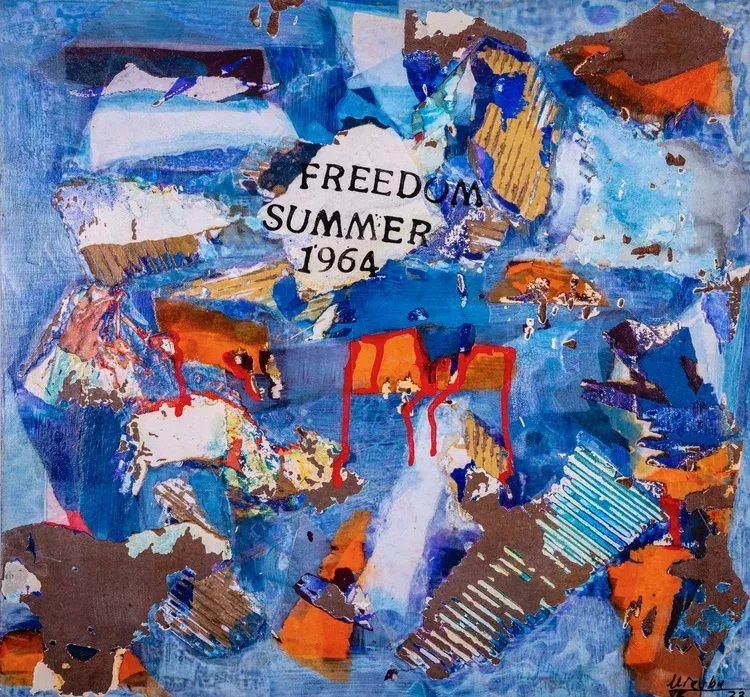
Ephraim Urevbu
Freedom Summer 1964
Acrylic and mixed media on board
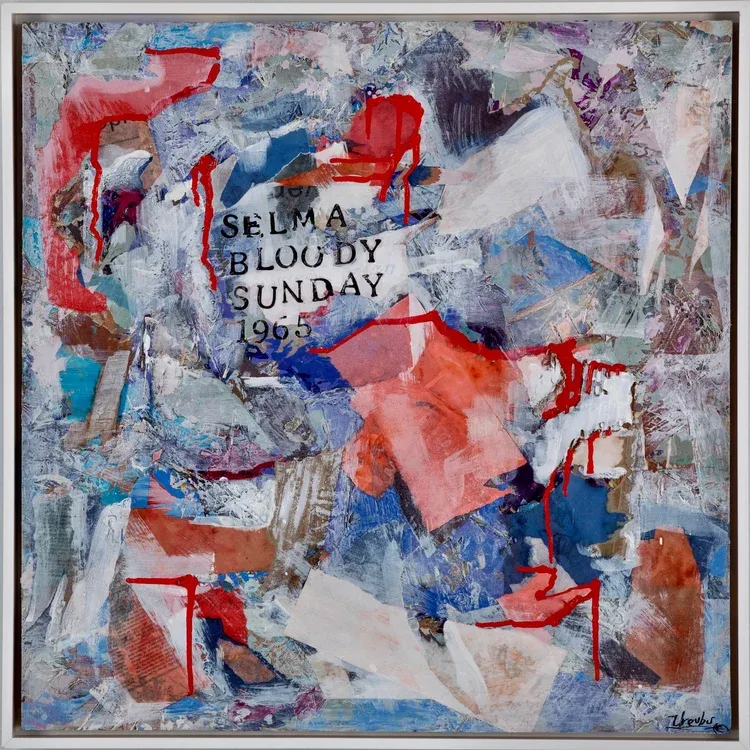
Ephraim Urevbu
Selma Bloody Sunday 1965
Acrylic and mixed media on board