Assassination & Aftermath is not just about what happened on April 4, 1968. The patterns that have emerged force us to reexamine our conscience as we witness the present as well. Visitors confront the weight of a nation at a breaking point and the cost of a voice powerful enough to be labeled “the most dangerous man in America.” As you move through the exhibit, you feel the pressure, the surveillance, and the urgency that surrounded Dr. King’s final years.
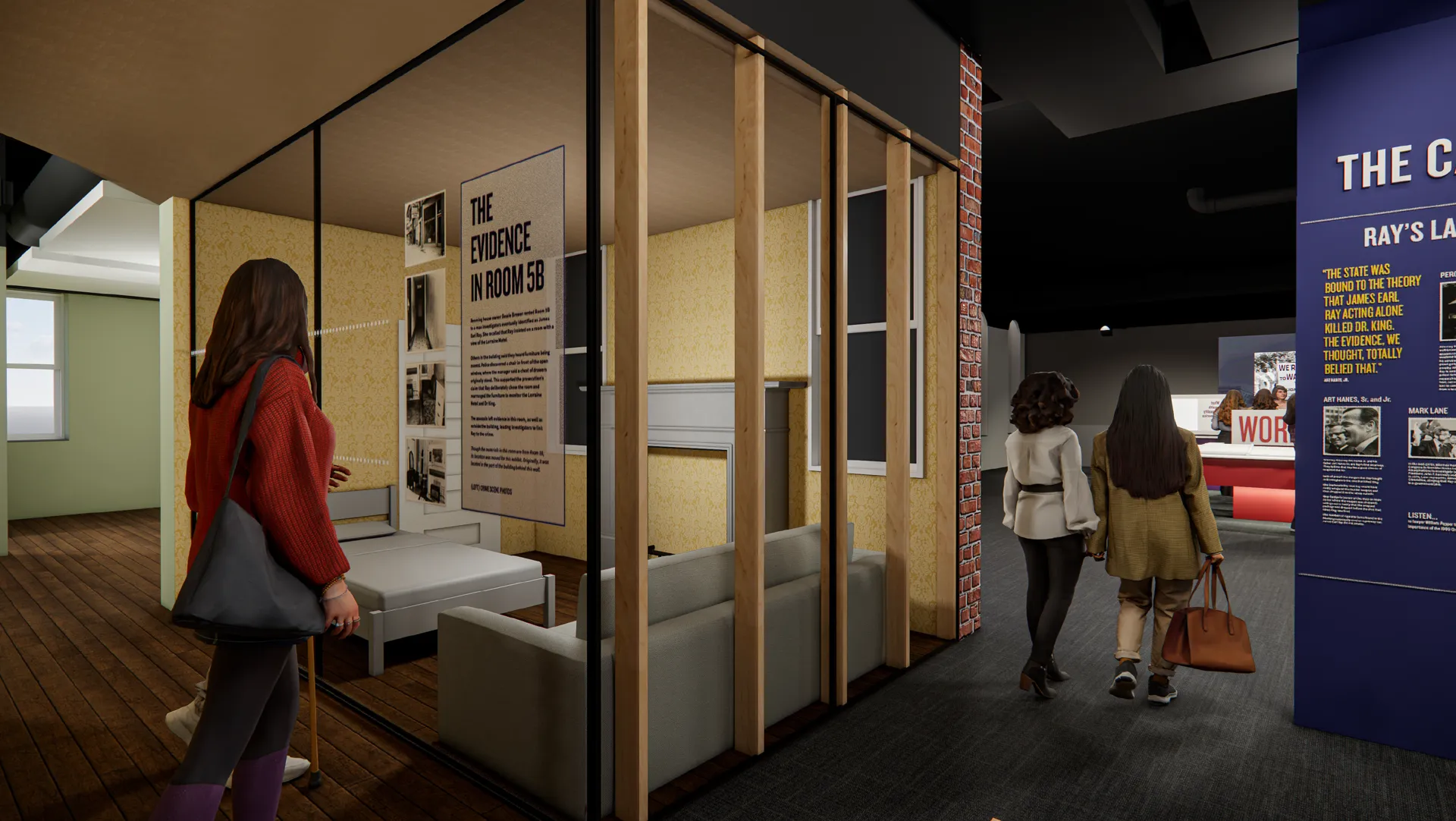
You will walk step by step through the moments leading to the assassination and its immediate aftermath, experiencing how a single act reverberated across Memphis and the world. The evidence, the footage, the firsthand accounts challenge you to process how truth is built in real time and how quickly it can shape public understanding.
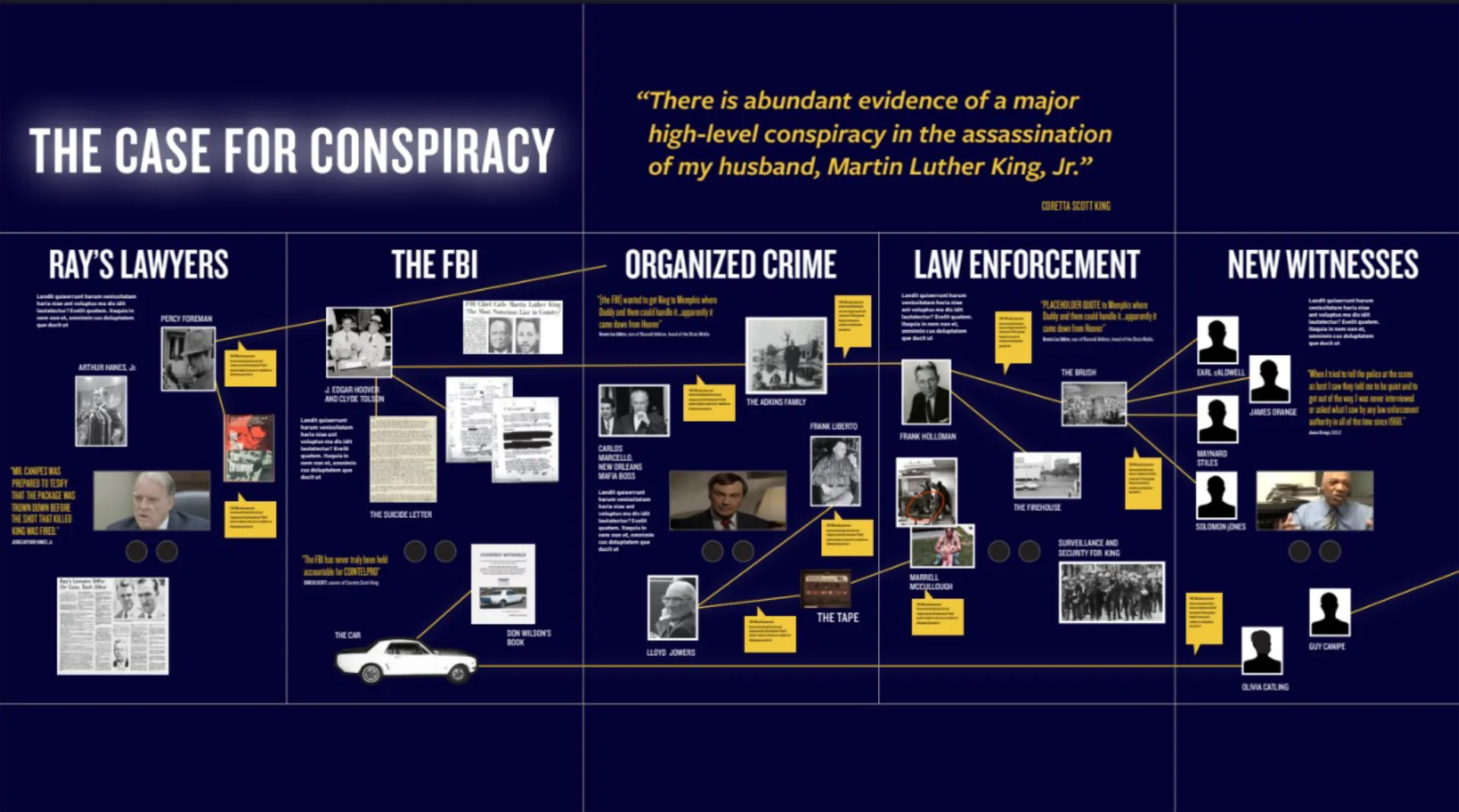
As the story unfolds, you are placed inside the investigation itself, examining the manhunt, the case against James Earl Ray, and the records that formed the official narrative. What stays with you is not just what was concluded. It is the tension between certainty and doubt. You are asked to weigh the evidence, question the gaps, and recognize how justice can feel incomplete.
Visitors must grapple with many unanswered questions. You are faced with enduring questions about truth, accountability, and memory, questions that extend far beyond 1968. The experience challenges you to consider how Dr. King’s death is remembered, who shapes that memory, and what responsibility we carry in continuing the work he left behind.