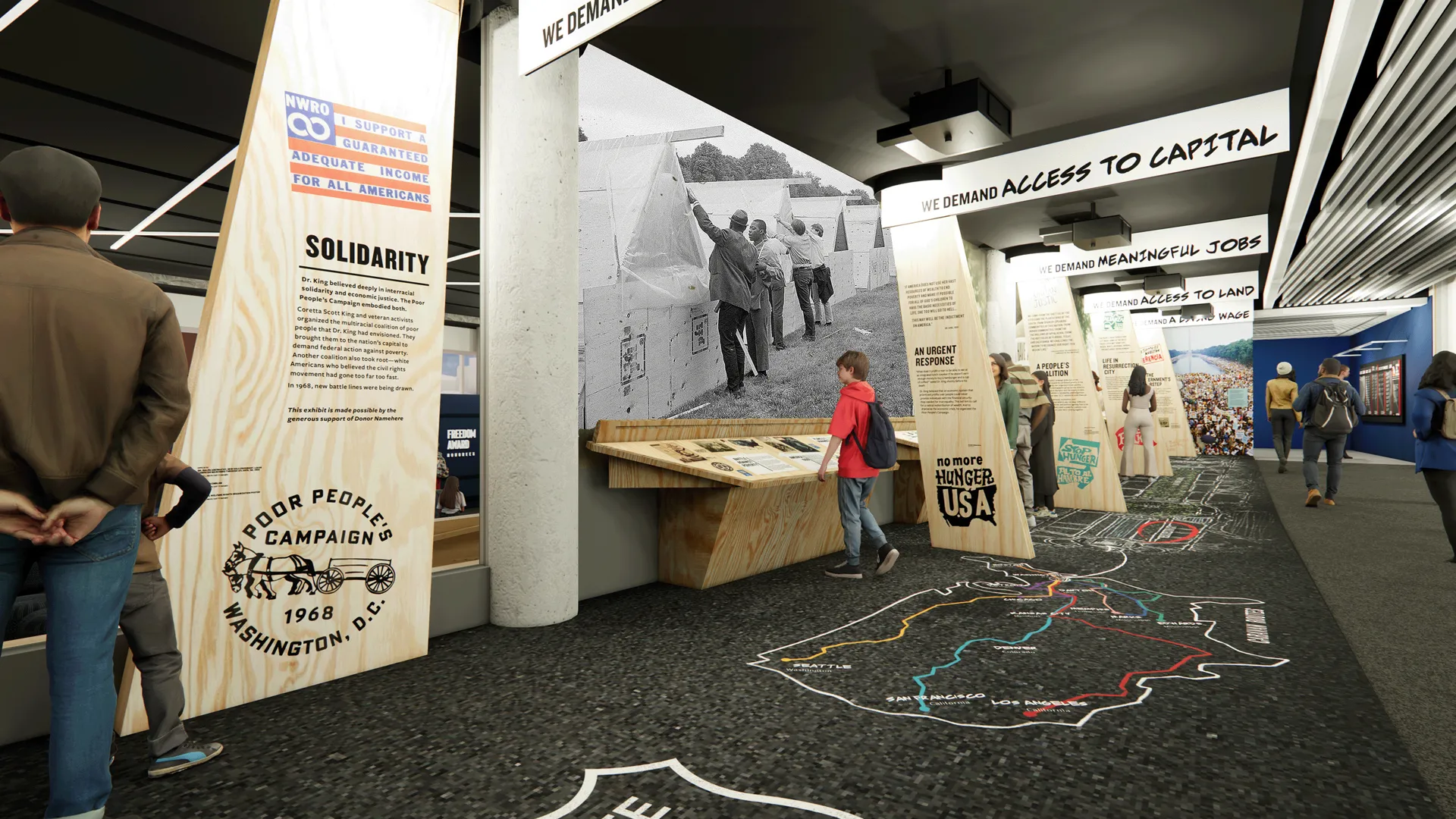
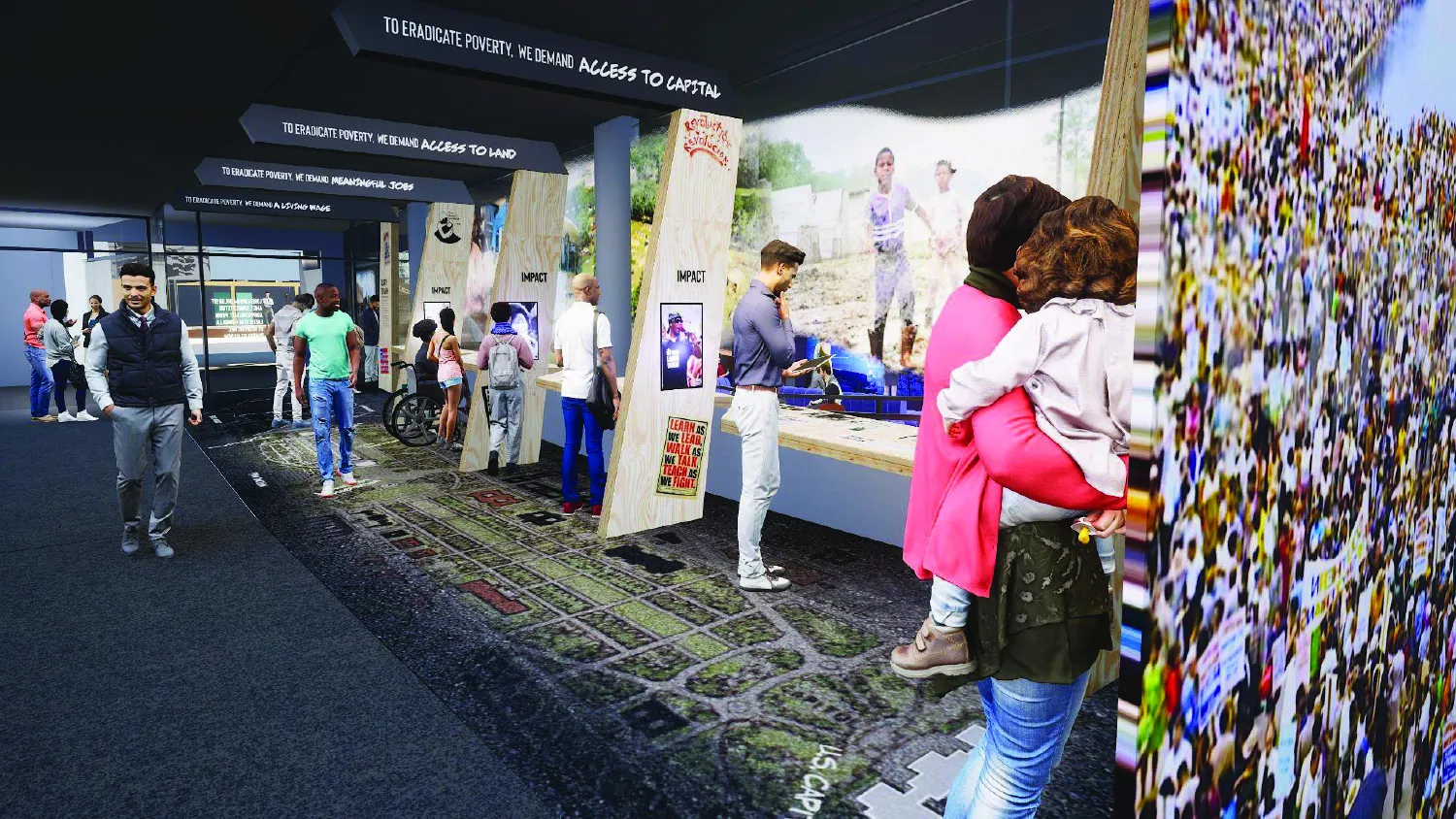
The Poor People’s Campaign challenges you to see inequality through a different lens. It is not just a moment in history. It is a direct confrontation with the gap between the promise of America and the reality faced by millions. As you move through the story, you begin to understand how economic justice became central to Dr. King’s final vision and why it remains unresolved today.
You step into a movement that pushed beyond civil rights as most understood it, demanding jobs, housing, and dignity as fundamental rights. The call for an economic bill of rights reframes freedom itself, asking you to consider what equality truly requires. Through the voices of those who organized and participated, visitors gain a clearer picture of how poverty was not accidental, but systemic.
The experience immerses you in the scale and ambition of the campaign. You follow the journey of people who traveled across the country to build Resurrection City, creating a living model of protest, community, and resilience in the heart of the nation’s capital. Their stories reveal the determination it takes to organize across race, region, and generation, even in the face of resistance and uncertainty.
As the movement builds toward Solidarity Day, the focus shifts from demonstration to demand. You witness how collective action can amplify voices often ignored and force a nation to reckon with its priorities. The challenges faced along the way highlight both the strength and fragility of large scale movements.
It is not just what the campaign achieved, but what it exposed. Visitors leave with a deeper understanding that the fight for civil rights and economic justice cannot be separated. The experience presses you to reflect on how those same issues show up today and where responsibility for change truly begins.